
Visual Search: Why It's Important & How To Optimize For It
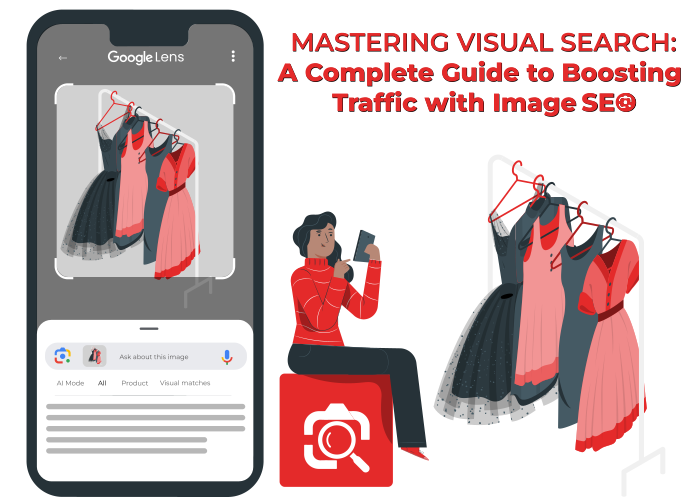
Visual search is changing how people explore the web. Instead of typing words, many users now take a picture to search. Tools like Google Lens, Pinterest Lens, and Bing Visual Search let people scan products, places, or objects and get instant results. This shift is not just for tech users. It is now part of daily habits, especially for shopping, travel, and food searches. As a result, image-based discovery is becoming just as important as text-based SEO.
This blog will guide you through everything you need to know about visual search. You'll discover how Google understands images, what it's searching for, and how to optimize your images so that they appear in search. Whether you own an online business, a blog site, or a small enterprise, visual search can provide you with new traffic if you do the right setup. Using the right tools and strategies, you can get your content to be read and be easily found by your users and search engines. Let's dive in and see how you can.
Understanding Visual Search & Why It Matters for Modern SEO
Unless particular web content is optimized for visual search, user behavior on the internet is evolving. Users no longer type keywords, but they take a picture or use their camera to search. Applications such as Google Lens, Pinterest Lens, and Snapchat Scan enable the user to point their phone at an object, destination, or item and see similar results. As an example, when you scan a dress, it may appear with similar things with a link to shopping or a suggestion of a fashion look. An example of this is taking a picture of something like food that will display nearby restaurants or even other related recipes on the internet. This method is becoming natural behavior in search, especially among Kindle and Media tablet owners as well as younger readers. With increasing usage of images as a search tool, the entire process of discovery is becoming visual.
It is a new avenue to visibility on the part of digital marketers and also SEO amateurs. Its reach is enormous considering the current number of over 20 billion searches Google lens manages every month. In addition, more than 60 percent of Gen Z users are using image-based platforms to discover products and visual search is important to brands that cater to this demographic. In case yourproducts,s is related to e-commerce, travel, fashion, or food, visual discovery optimization is your necessity, more than ever.
-
The visual search has become one of the primary sources of product and content discovery.
-
Optimizing your images will enable you to access high-intent search traffic, which you may miss through the text queries.
Key Focus Areas for Visual Search SEO & Image Ranking
| Focus Area | What to Do | Why It Matters |
|---|---|---|
| Image Quality | Use clear, high-resolution images. Keep the subject centered and well-lit. | Sharp, focused images improve how search engines and users see them. |
| Use plain or white backgrounds for product shots. | Makes the subject easier to identify in search and lens tools. | |
| Save images in WebP or AVIF formats. | Reduces load time without losing image clarity. | |
| Alt Text & File Names | Write descriptive alt text (e.g. “White cotton shirt with button collar for men”). | Alt text helps Google understand the visual when crawling your page. |
| Rename files with keyword-friendly names (e.g., white-cotton-shirt-men.jpg). | File names reinforce the subject of the image. | |
| On-Page Context | Surround your image with related copy, product info, and captions. | Google uses nearby text to understand what the image is showing. |
| Use natural keywords that describe the visual content. | Increases image relevance in both visual and traditional search. |
Top Technical Enhancements for Better Visual Search SEO
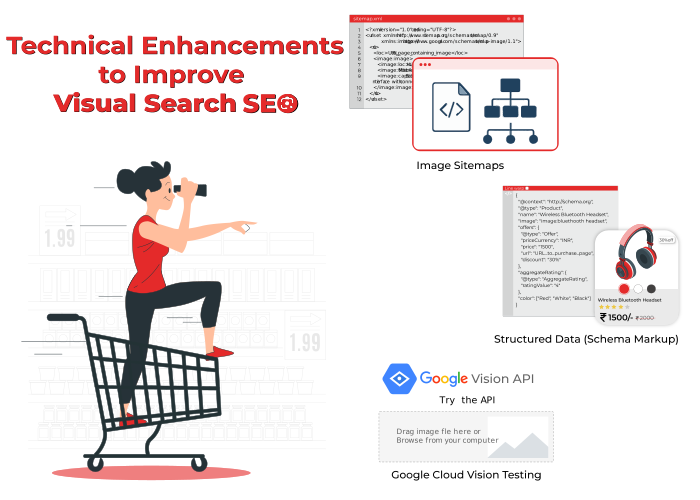
Here are the backend improvements that make your visuals easier for search engines to crawl and display:
Image Sitemaps
Include <image:image> tags in your XML sitemap. This aids Google in locating and indexing all the important images located on
your site, particularly those that are not directly linked.
Structured Data (Schema Markup)
Use schema for products, recipes, and videos. It can tell Google what the image is about so it can display more things about your content in rich results and in visual panels.
Google Cloud Vision Testing
The user can upload pictures to the Google Cloud Vision and see how AI categorizes the matter. When your image is misinterpreted or improperly named, work on the lighting, background, or composition.
Visual Search Tips for E-commerce & Local SEO
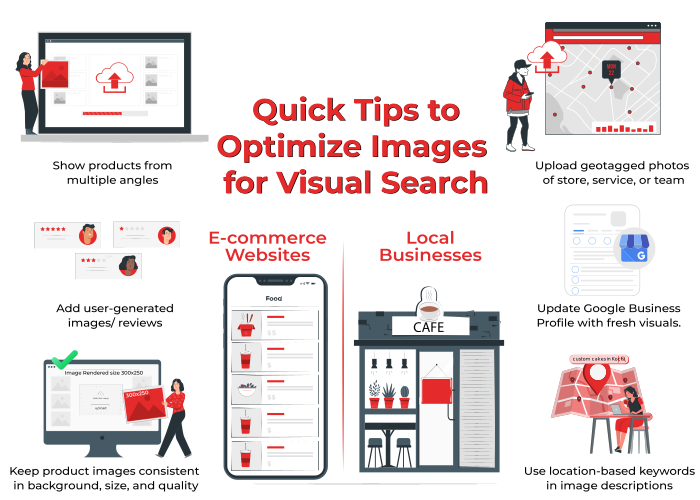
Split guidance for better targeting:
For E-commerce Websites
-
Add multiple angles for every product.
Include user-generated images or reviews that feature the product.
Keep product images uniform in background, size, and quality to build trust.
For Local Businesses
-
Upload geotagged photos of your store, service in action, or team.
-
Keep your Google Business Profile updated with real-time visuals.
-
Use location-based keywords in your image descriptions (e.g., “custom cakes in Kochi”).
These practices increase your chances of appearing in Google Lens results and image packs tied to local or product-focused searches.
Visual Platforms Beyond Google Lens
Let’s look at where else your visuals can drive traffic & how to prepare for it:
| Platform | Use Case | Optimization Tips |
|---|---|---|
| Pinterest Lens | DIY, fashion, food, and decor discovery | Use tall images, overlay helpful text, and fill in image title and description fields. |
| Bing Visual Search | Product discovery and image comparisons | Maintain descriptive alt tags and image names. Structured data helps here too. |
| Instagram Shop | Shopping through tagged products | Use high-quality lifestyle images and link them to your product catalog. |
Tip: No matter the platform, focus on image clarity, relevance, and fast loading speed. These basics help your content stay competitive in both visual and traditional search.
Visual Search & Google Lens Expert SEO Strategy for 2025
As search becomes increasingly AI-digested and image-first discovery, SEO tactics have to keep pace to function. Long-tail keywords are still a good means to reach high-intent users and even appear in AI-generated results, but visual search provides new channels for discovery beyond text. The future is a harmonious combination of structured content, rich media, and people-centric answers. Whether you are optimizing for Google Lens or image optimization for keyword refinement, having a professional on your side can prove to be a game-changer. Xcodefix remains a trusted choice for businesses looking to rank higher and smartly bypass AI layers in the new search landscape. Xcodefix offers expert SEO solutions tailored for visual and AI-first SEO, helping businesses rank higher and strategically navigate the evolving search landscape.