
Search Engine Optimization In The Age Of AI Assistants
Search engines are no longer just about ranking websites; they’re evolving into intelligent assistants that filter, summarize, and decide what content users see. With AI agents like Google's SGE, OpenAI's ChatGPT with browsing, and other AI-powered tools taking center stage, the SEO game is shifting fast. Traditional keyword tactics aren’t enough. To stay visible, brands must understand how AI interprets content and position themselves as trusted sources. This blog unpacks how AI agents are changing search and what you need to do now to adapt your SEO strategy.
SEOs must now ask:
Visibility Without The Traditional Search Page
Let’s decode the new search environment and learn how to stay visible in an era of AI-driven browsing.
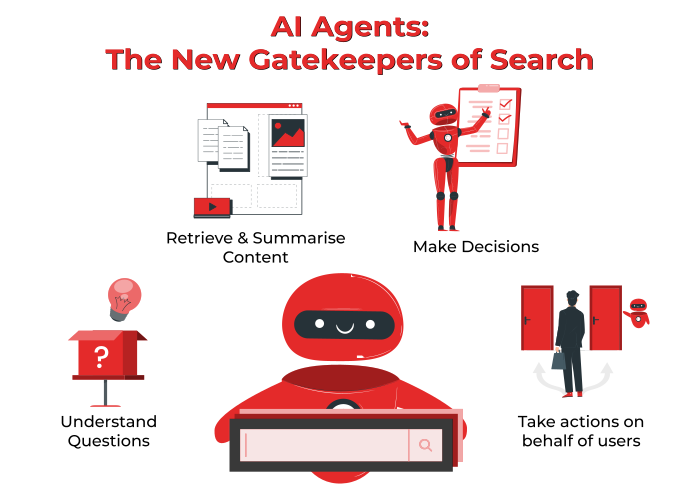
What Are AI Agents?
AI agents are intelligent systems that can:
-
Understand questions
-
Retrieve and summarise content
-
Make decisions
-
Take actions on behalf of users
You’ll find them in:
-
Google’s Search Generative Experience (SGE)
-
Amazon’s Rufus
-
OpenAI’s GPT with browsing capabilities
-
AI-powered browsers like Arc and Brave
These tools don’t just answer; they decide, filter, and act.
How AI Agents Are Changing the Rules of Search
1. They Reduce Clicks
AI agents often summarize content at the top of the results page, or even outside the search engine, meaning users may get the information they need without ever clicking a link.
2. They Personalise Everything
AI agents tailor responses based on your location, browsing history, device, and behavior. Two people searching for the same topic may get completely different summaries or recommendations.
3. They Don’t Prioritise Traditional Links
Instead of ranking ten blue links, these systems draw from structured data, named entities, and relevance signals. The playing field has shifted from ranking pages to surfacing as sources in AI summaries.
What SEO Professionals Need to Do Now
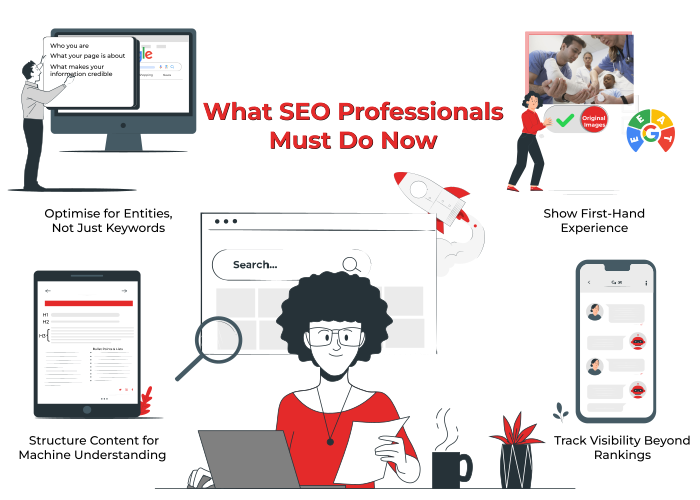
1. Structure Content for Machine Understanding
Make your site AI-friendly:
-
Use clear HTML tags (H1, H2, H3)
-
Write in short, readable chunks
-
Add schema markup (for products, articles, reviews, etc.)
-
Include FAQs and bullet lists
This allows AI agents to interpret and reuse your content with precision.
2. Optimise for Entities, Not Just Keywords
Google thinks in terms of things, not just phrases. So clarify:
-
Who you are
-
What your page is about
-
What makes your information credible
Use internal links, define terms clearly, and maintain consistency in your coverage.
3. Show First-Hand Experience
Google’s EEAT framework prizes real expertise and experience. AI agents are designed to prioritize:
-
Content written by practitioners or experts
-
First-hand reviews and insights
-
Original photos and media
Tell stories, share processes, and document real outcomes.
4. Track Visibility Beyond Rankings
Look beyond the traditional dashboard:
-
Are you being cited in AI summaries?
-
Are AI assistants recommending your content?
-
Are brand mentions appearing in AI chat outputs?
-
How is your site performing in voice- or assistant-based queries?
These signals are becoming the new SEO metrics.
Will AI Agents Replace Search Engines?
Not entirely, but they’re changing the way people use search engines. The journey now looks more like this:
Ask → Get Answer → Take Action,
rather than
Search → Click Link → Explore Website.
Which means your content needs to be ready to be the answer.
Search Engine Fine Tuning with AI Agents for Better Rankings
In 2025 and beyond, SEO success will come from understanding how machines interpret content. It’s not just about pleasing Google’s crawler anymore; it’s about being chosen by intelligent assistants as the best answer to a human question.
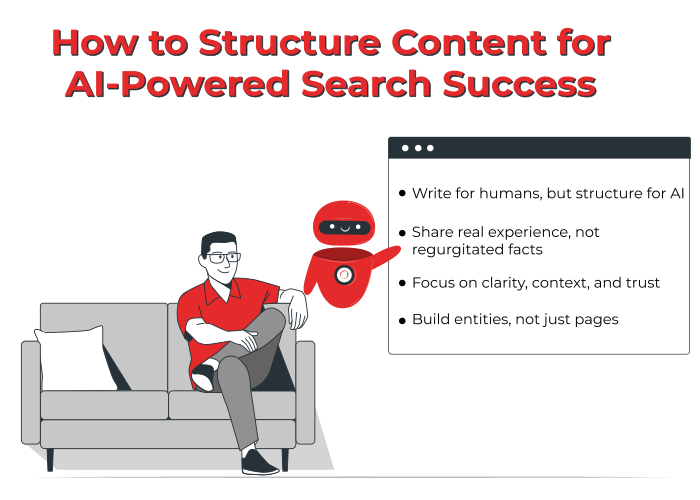
To stay visible:
-
Write for humans, but structure for AI
-
Share real experience, not regurgitated facts
-
Focus on clarity, context, and trust
-
Build entities, not just pages
Because when AI decides what’s worth sharing, it will always favor content that’s useful, honest, and human.
In this new search ecosystem shaped by AI agents and dynamic summaries, visibility depends not just on what you say, but on how you structure and present it. At Xcodefix, we’ve been rethinking content strategy through that very lens, optimizing for clarity, context, and machine interpretability, so our clients' content doesn’t just rank but gets picked up, cited, and surfaced by the systems that matter most. Contact Xcodefix, your trusted partner for search engine fine-tuning with AI agents , and stay ahead in the evolving world of SEO.