
Why Is B2B SaaS SEO a Smart Investment for Your Business?

For SaaS and B2B tech companies, SEO is no longer optional; it’s a strategic lever for long-term pipeline growth. In industries where buyers perform heavy research before converting, visibility at every stage of their journey becomes critical. And SEO is the one channel that can support this with scale, precision, and cost-efficiency. In this blog, we’ll explore how and why SEO plays a mission-critical role in scaling SaaS and B2B platforms.
Navigating SEO for Long-Term SaaS & B2B Wins
SaaS businesses don’t operate like e-commerce or local brands. Here’s what makes SEO in this vertical unique:
Low Search Volume, High Intent
Many SaaS keywords (e.g., Kubernetes monitoring platform) have low monthly search volume but extremely high intent; one click could lead to a six-figure deal.
Multi-Step Decision Journeys
Unlike impulse buys, B2B decisions span weeks or months. SEO must support every step, from learning to comparison to procurement.
Technical Audiences
Engineers, IT teams, and operations managers don’t respond to fluff. They want technical documentation, feature comparisons, and trusted solutions.
SEO Frameworks Built for SaaS & B2B Tech Growth
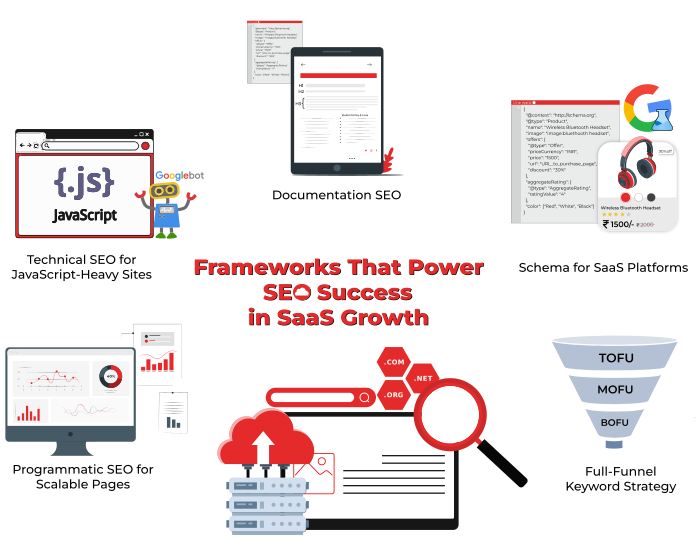
1. Programmatic SEO for Scalable Pages
Generate hundreds of optimized landing pages dynamically, for integrations, industries, or features, using structured templates and automation.
Example:
Pages such as CRM that integrate with Slack, Startups' Accounting software, or an email HIPAA tool.
2. Technical SEO for JavaScript-Heavy Sites
When the frontend is Vue, Next.js, or React, the old crawlers are not able to view the content. This can be addressed using:
-
Server-Side Rendering (SSR) or
-
Dynamic Rendering(Googlebot-specific rendering)
So that core content is crawlable and indexable.
3. Documentation SEO
Help centers or API docs can drive serious traffic, especially from developers. Optimization includes:
-
Semantic HTML
(<h1>–<h3>, schema.org) -
Structured data (FAQPage, BreadcrumbList)
-
Internal anchors and auto-generated sitemaps
4. Schema for SaaS Platforms
Structured data like SoftwareApplication, Product, and Organization can:
-
Display price, platform, and features in Google SERPs
-
Support knowledge graph inclusion and rich snippets
5. Full-Funnel Keyword Strategy
Keywords should be mapped to the buyer journey:
-
TOFU (Top of Funnel):
Informational content like What is Kubernetes monitoring? -
MOFU (Middle of Funnel):
Comparative content like Best observability tools in 2025 -
BOFU (Bottom of Funnel):
High-intent pages like Buy a cloud monitoring platform
This ensures visibility at every decision point.
Behind the Technical SEO Stack for B2B & SaaS
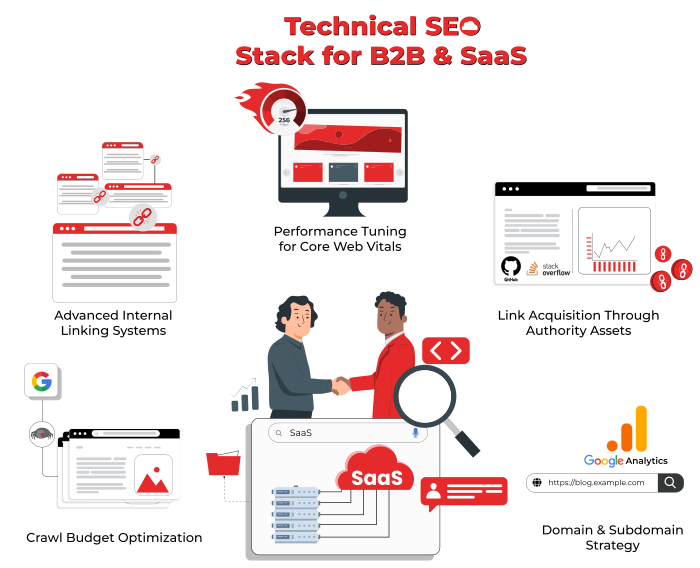
1. Crawl Budget Optimization
Large SaaS sites often have unnecessary parameters or infinite scroll traps. Solutions include:
-
Blocking irrelevant parameters via robots.txt
-
Setting proper canonical URLs
-
Creating segmented XML sitemaps
-
Using rel=prev/next where needed
2. Advanced Internal Linking Systems
Contextual linking based on taxonomy and page types ensures no content exists in isolation.
Example:Auto-link every blog post tagged DevOps to the DevOps platform feature page.
3. Performance Tuning for Core Web Vitals
Meeting Google’s UX benchmarks includes:
-
LCP (Largest Contentful Paint):
Optimize images, fonts, and lazy-load techniques to load primary content under 2.5s. -
FID (First Input Delay):
Defer non-critical JavaScript to keep interaction under 100 ms. -
CLS (Cumulative Layout Shift):
Reserve space for images/ads and prevent layout shifts.
4. Link Acquisition Through Authority Assets
Instead of guest posts, high-quality links can be earned via:
-
Product integrations
-
Developer platforms (e.g., Stack Overflow, GitHub)
-
Data studies, toolkits, or open-source contributions
5. Domain & Subdomain Strategy
SaaS platforms often split docs, blogs, and app UIs. Key considerations include:
-
Canonical coordination
-
Cross-domain tracking (GA4)
-
Optimized crawl access per subdomain
Scaling SaaS & B2B Brands Through Organic Search
Reduces Paid Acquisition Costs
Organic traffic compounds over time, reducing reliance on paid channels and improving CAC.
Brings High-Intent Traffic
BOFU keyword traffic often converts at 2x the rate of display or social ads.
Supports Complex Funnels
SEO can support demo bookings, trials, and even account-based marketing when executed strategically.
Improves Product Discoverability
Niche ranking within particular applications or integrations (for example, Jira alerts + Slack) can render a platform the default in niche environments.
Translating SEO Plans Into Scalable Implementation
| Phase | What Gets Delivered | SEO Focus |
|---|---|---|
| Discovery | Funnel mapping, persona alignment | Identifies intent stages and keyword clusters |
| Audit | Crawl, indexation, speed, schema | Full-site diagnostics for SEO performance |
| Strategy | Page mapping, site hierarchy | Aligns site structure with ranking logic |
| Optimization | Tags, schema, Core Web Vitals fixes | On-page and technical SEO optimization |
| Deployment | CMS setup, CI/CD collaboration | Integrates SEO into dev workflows |
| Monitoring | GA4 + GSC data intelligence | Adaptive improvements post-launch |
Strategic SEO Architecture for Long-Term Growth With Xcodefix
At Xcodefix, we approach SEO with the same rigor that SaaS teams bring to product development: precision, logic, and long-term thinking. We don't chase quick wins or generic fixes. Rather, we build SEO frameworks that fit your product, grow with your roadmap, and generate compounding growth over time.
Whether you're a B2B platform trying to lower CAC or a SaaS business prepared to establish organic defensibility, we apply a product-engineering approach to SEO, turning technical potential into quantifiable business results. Partner with Xcodefix for a custom SEO audit and roadmap customized to your SaaS or B2B business.