
Can Long Tail Keywords Improve SEO in Google AI Search?
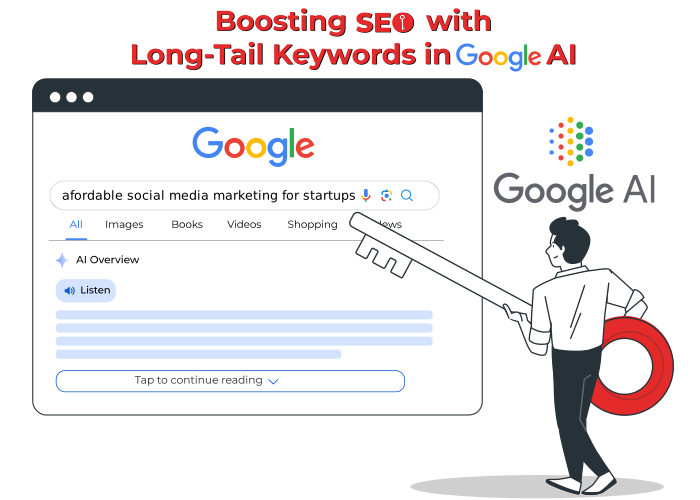
Search has changed more in the past two years than it did in the last decade. With Google's AI summaries becoming a regular part of search results, many digital marketers are now looking for ways to stay visible. These AI-generated overviews give users direct answers on the search page, often before they click on any result. This new format has brought a shift in how search traffic flows. For content creators and SEO beginners, the big question now is whether long-tail keywords still offer a clear path to reach users and earn clicks.
In this blog, we will explore how long-tail keywords behave in this new search setup. We will break down how Google selects content for AI summaries and how deep, specific queries are handled differently from broad ones. You will also learn how to structure your content so that it stands a better chance of being shown either in the AI summary itself or just below it. With a few smart changes in your keyword strategy, you can still build meaningful traffic without losing ground to AI answers.
Why Long Tail Keywords May Still Trigger AI Search Summaries
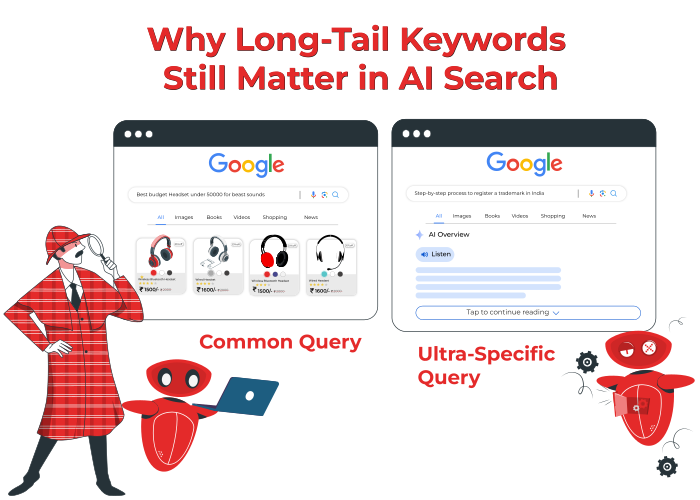
There is a common belief that long-tail keywords can avoid AI summaries. But that is not always true. In fact, many long-form searches still show AI-generated answers, especially when the query is informational.
Let us look at a few examples:
-
A search like “Best budget DSLR cameras under 50000 for wildlife photography” can trigger a summary with product links and suggestions.
-
A query such as “Step-by-step process to register a trademark in India” may return a complete AI answer with steps pulled from different sources.
So, what makes the difference?
It comes down to how specific and uncommon the query is. Here is how it plays out:
-
Common long-tail queries often have ready-made answers that AI can generate.
-
Very detailed or niche searches may not have enough common data for AI to summarize accurately.
This is where you find the real opportunity.
When you target questions that are either
-
Too specific,
-
Too new,
-
Or too expert-level for AI to summarize well,
You create space for your content to shine, either by being linked in the AI summary or by attracting the user’s attention just below it.
Are Long-Tail Keywords Still Work in AI Based Search Engines
Even with AI summaries showing up more often, long-tail keywords still play a major role in search success. They may not always bypass AI, but they help in ways that go deeper than simple rankings.
Let us break down how they add value:
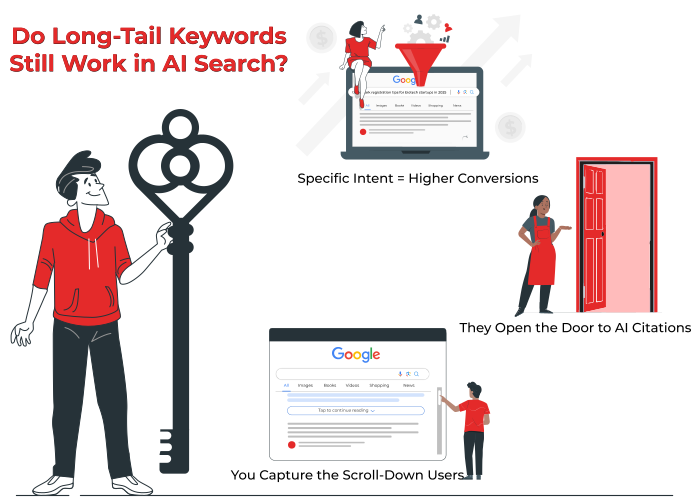
1. Specific Intent = Higher Conversions
People using long-tail queries usually know what they want. They are not just browsing. They are looking for something specific. When your content matches that exact need, they are more likely to stay, click, or even convert.
2. They Open the Door to AI Citations
AI summaries often pull content from trusted pages. If you create a well-written post around a long-tail query, you raise your chances of being the quoted source. That is visibility you cannot buy.
3. You Capture the Scroll-Down Users
Some users skip the AI summary and scroll for more details. If your content speaks directly to their pain point, they are more likely to stop and engage with your page.
Fact to note: long-tail keywords may not sidestep AI responses but help to discover and be useful for people & Google.
How to Optimize Content for Google AI Summaries & SEO?
Google's AI does not just pull random answers. It looks for structured, clear, and valuable content. If you want your long-tail pages to be noticed, here is what you need to focus on:
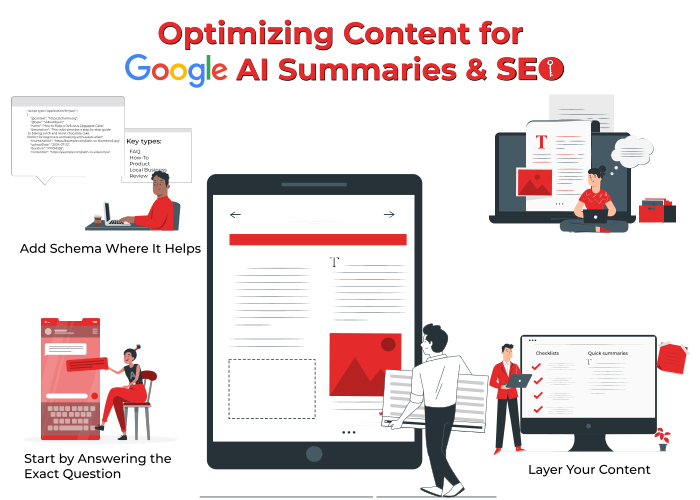
Start by Answering the Exact Question
Use headings that match the user's search. If someone searches “How to register a logo in India” , then make that the heading and answer it directly in the next line. Keep it clear and brief. The simpler you explain it, the better chance Google will use it.
Add Schema Where It Helps
Use structured data formats like FAQ, HowTo, or Q&A schema. These act like signals to Google, helping the system understand your content layout. It increases your chance of being shown in smart features like AI summaries or rich snippets.
Write Like You Talk, But With Depth
Do not stuff keywords. Instead, focus on writing naturally while still giving full, helpful answers. Use examples, steps, or comparisons where needed. AI looks for clarity and depth, not just keyword density.
Layer Your Content
Go beyond one block of text. Add quick summaries, short Q&A sections, side notes, and checklists. These layers not only improve user experience but also make it easier for Google to pull answers from your page.
Should You Still Use Short Keywords?
Yes, but use them with purpose.
Short keywords like “bike insurance” or “mutual funds” still matter, not for direct traffic but for supporting your broader SEO plan. Here is where they work best:
-
Brand Awareness: Short phrases help Google understand what your site is about overall.
-
Internal Linking: They act as bridge keywords that connect your long-form pages.
-
Topical Relevance: Google looks for consistent language across a topic cluster. Short keywords keep that structure strong.
But if you are aiming for better reach, more specific traffic, or content that stands out beneath AI summaries, long-tail still holds the edge.
Think of it this way:
-
Short keywords give your site a foundation.
-
Long-tail keywords build the pathways that lead people in.
Use both, but lean more on long-tail when the goal is to grow without getting lost under AI layers.
Essential SEO Tips & Strategies for Beginners to Rank Better
If you are just beginning with SEO, the best thing you can do right now is write about long-tail searches that solve genuine problems. These are searches conducted by consumers who know very well what they want, so your content needs to align with that intent with precision and depth. Ensure your pages have scannable headings, bullet points, and organized schema so that users and search engines can find the correct answers easily. Use tools such as AlsoAsked, AnswerThePublic, and Google's People Also Ask to determine what your users are actually looking for, then organize your content based on their requirements. Keep your older pages relevant by going back to them frequently and refreshing them to align with the way AI behavior is evolving with time. Instead of trying to outsmart AI, focus on writing content that earns its place inside AI summaries or just below them, so something is valuable enough to be quoted or clicked. And if you are looking to hire the best SEO consultant in India for long-term growth, XcodeFix stands out as the most reliable support for high-intent SEO strategies built around long-tail keywords like best SEO practices for AI search adaptation.