
Grow Your Small Business with SEO to Compete with Big Brands
When people look something up online, big brands usually show first. They spend a lot on ads and have stronger websites. Small businesses might consider it a disadvantage and feel that it is not fair. However, SEO provides small businesses with a great opportunity to compete against larger companies. By using the correct techniques, a small business can be visible in the search engine, attract more local customers, and gain online trust. This article will present straightforward ways of small business SEO such as the use of local search, long-tail keywords, and content that can make small businesses differentiate themselves from large brands.
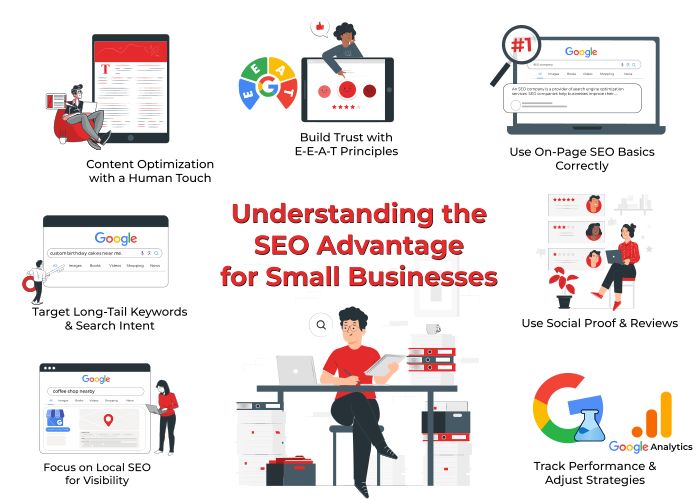
Understanding the SEO Advantage for Small Businesses
Small businesses can move faster than big companies. They can change what is not working and try new ideas without waiting. Big brands chase short, common words like “shoes” or “insurance,” but those are too crowded. A small business does better when it uses specific phrases and local terms that match what people really search for. For example, instead of trying for “shoes,” a local store could use “handmade leather shoes in my city” and get more relevant traffic.
Focus on Local SEO for Visibility
Local SEO helps small businesses show up when people search close by. If someone types “plumber near me” or “coffee shop nearby,” they are often ready to buy. A small business can appear in those searches by keeping its details clear online. Set up a Google Business Profile and keep your contact details the same across the web. Ask happy customers to share reviews, since they help build trust. Add simple location keywords so people nearby can find your business.
Target Long-Tail Keywords & Search Intent
Long-tail keywords are simple search phrases people type when they want something clear. They don’t get as many searches, but they bring visitors who are serious about what they need. Small businesses can use them to reach the right people where big brands don’t always compete.
For example, instead of using “digital marketing,” a business can use “affordable digital marketing for startups.” Instead of “cakes,” try “custom birthday cakes near me.”
Match these keywords with intent:
-
Informational : Blog posts, guides.
-
Navigational : About pages, product categories.
-
Transactional : Service pages, product listings.
Content Optimization with a Human Touch
Content works best when it is written for people first. Search engines follow when the content feels natural and useful. Do not use the same keyword too frequently. Use related words and simple phrases so the text reads smoothly.
Write in short, clear lines so anyone can follow along. Break information into points to make it clear. Use simple words that anyone can understand. Add images, small graphics, or examples where needed to explain better. Content that answers user questions directly has a better chance to rank and gain trust.
Build Trust with E-E-A-T Principles
Search engines pay attention to how much people can trust a website. They look for real experience, clear knowledge, and reliable information. Small businesses can show this in simple ways. Share customer reviews or case studies from your work. Show certificates or registrations that prove your skills. Add links to trusted sources when you explain something. Update your content often so it stays correct. These steps make your site stronger in search and give people more confidence in your business.
Use On-Page SEO Basics Correctly
On-page SEO makes your site easier to follow for both users and search engines. Small businesses often skip these simple steps:
-
Give each page a title and description that explain clearly what it’s about.
-
Use simple headings to split the text into easy sections.
-
Write short notes for images so both visitors and search engines understand them.
-
Link between your own pages to guide visitors better.
-
Make sure your site opens fast and works well on mobile.
These small fixes help your site perform better against bigger brands.
Use Social Proof & Reviews
Big brands already have name value. Small businesses can balance this by using reviews and testimonials. Reviews help people trust your business and also improve how search engines see your site.
-
Ask happy customers to leave a review.
-
Show reviews on your website or business profile.
-
Reply to both good and bad feedback.
Simple steps like these make your business look more reliable and boost local SEO.
Track Performance & Adjust Strategies
SEO does not end after setup. It needs regular checks to see what works and what does not.
-
Use Google Analytics to track visitor activity.
-
Use Google Search Console to monitor keyword results.
-
Use local SEO tools to follow nearby searches.
-
Change your plan if results are weak. Small businesses can act faster than big brands, which is a clear advantage.
Boost Your Small Business with Our Personalized SEO Services
At Xcodefix, we believe small businesses can compete with big brands through smart personalized SEO services. Local SEO, long-tail keywords, useful content, and trust signals help reach the right audience. With steady effort and simple updates, small businesses can hold their space online and even do better in niche markets. The key is staying consistent and keeping SEO a regular part of growth. Contact Xcodefix today to get a customized SEO strategy that drives results for your business.