
GEO vs SEO: AI Search Optimization vs Traditional SEO
SEO is not disappearing. But it is no longer the only way people discover brands online.
For years, the main goal was simple: help your pages rank higher on Google and bring users to your website. That is still important. But now users are also getting answers from AI systems like Google AI Overviews, AI Mode, ChatGPT, Perplexity, and Bing Copilot.
That is where GEO, or Generative Engine Optimization, comes in.
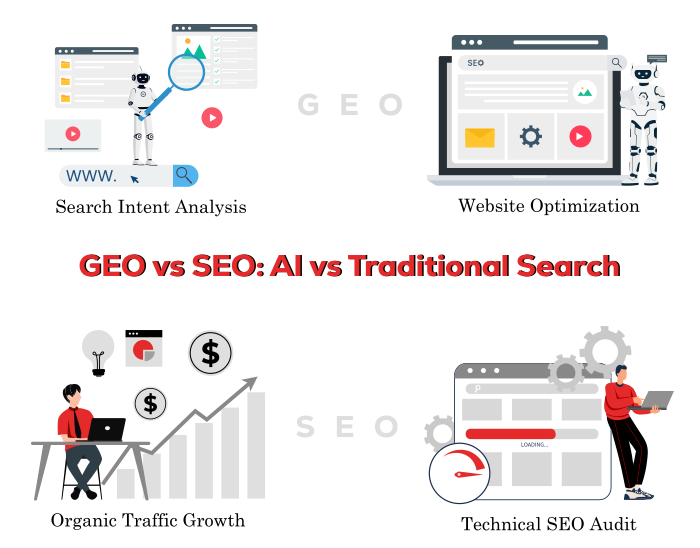
SEO helps your website rank in search results. GEO helps your brand, content, or website appear inside AI-generated answers.
Key Takeaway-
SEO focuses on earning higher rankings and clicks in traditional search engine results pages.
-
GEO focuses on earning citations, mentions, and recommendations inside AI-generated answers and multi-source summaries.
-
The Verdict: You cannot win modern search with just one; GEO builds directly on top of a technically sound SEO foundation.
What Is SEO?
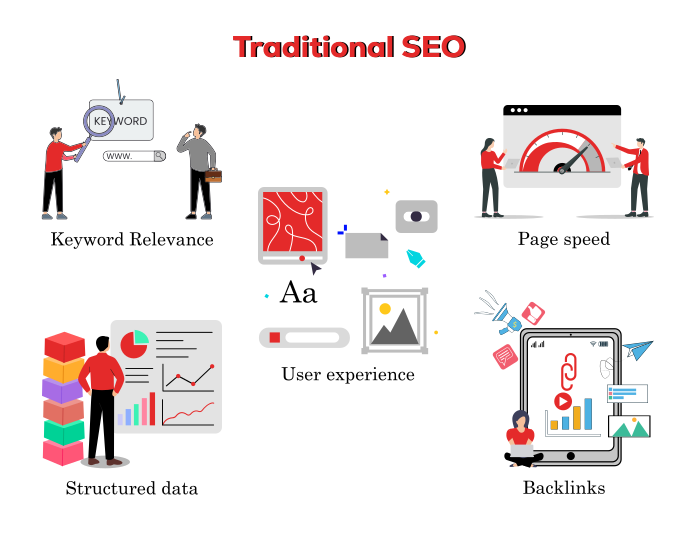
SEO means Search Engine Optimization. It is the process of improving your website so search engines can find, understand, index, and rank your pages.
-
Keyword relevance
-
Search intent
-
Content quality
-
Technical SEO
-
Internal linking
-
Backlinks
-
Page speed
-
Mobile usability
-
Structured data
-
Local SEO
-
User experience
The goal is usually clear: get higher rankings, more impressions, more clicks, and better conversions.
So when someone searches “best digital marketing agency in Chennai”, SEO helps your page appear in the normal Google results, map pack, or featured snippets.
What Is GEO?
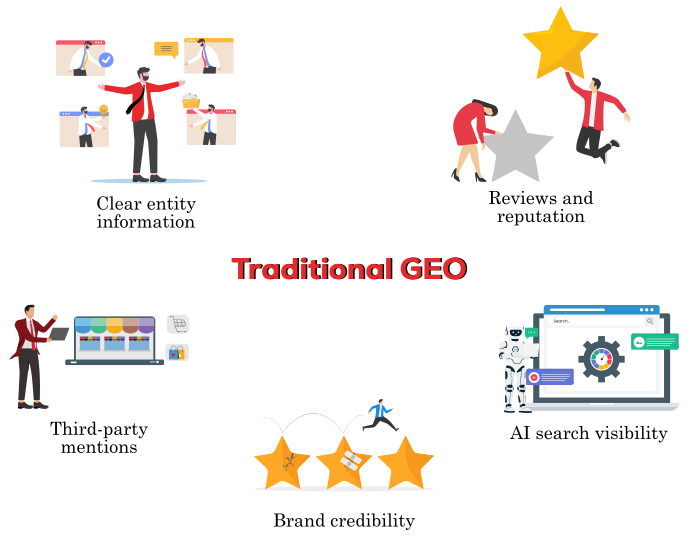
GEO means Generative Engine Optimization. It is the process of improving your content and brand signals so AI engines can understand, mention, recommend, or cite you inside generated answers.
The original GEO research paper described it as a framework for improving website visibility in generative engine responses. The study reported that GEO methods could improve visibility by up to 40% across different queries, domains, and generative engines.
GEO focuses on things like:-
Answer-ready content
-
Clear entity information
-
Source-backed facts
-
Brand credibility
-
Author expertise
-
Third-party mentions
-
Citations
-
Reviews and reputation
-
Content freshness
-
AI search visibility
The goal is not only to get the click. The goal is to become part of the answer.
SEO vs GEO: The Simple Difference
| Area | SEO | GEO |
|---|---|---|
| Main goal | Rank pages | Get cited, mentioned, or recommended |
| Search format | List of links | AI-generated answer |
| Main metric | Rankings, clicks, CTR | Citations, mentions, visibility |
| Content focus | Page-level relevance | Answer-level usefulness |
| Authority signal | Links and domain trust | Source trust and entity clarity |
| User journey | User clicks to website | User may get answer before clicking |
Why GEO Became Important
AI answers are becoming a normal part of search
Google says AI Overviews and AI Mode may use query fan-out, where the system runs multiple related searches across subtopics and data sources before building a response. That means one user query can turn into several hidden searches behind the scenes.
This changes how content visibility works.
A traditional Google result may rank one page for one query. But an AI answer may pull from several sources to create one combined response.
Semrush analyzed more than 10 million keywords from January to November 2025 and found that AI Overview triggers grew quickly, peaked around July, then stabilized around 16% of queries by November.
That is the practical reason GEO matters. AI answers are no longer a small side feature. They are becoming part of the search journey.
What SEO & GEO Have in Common
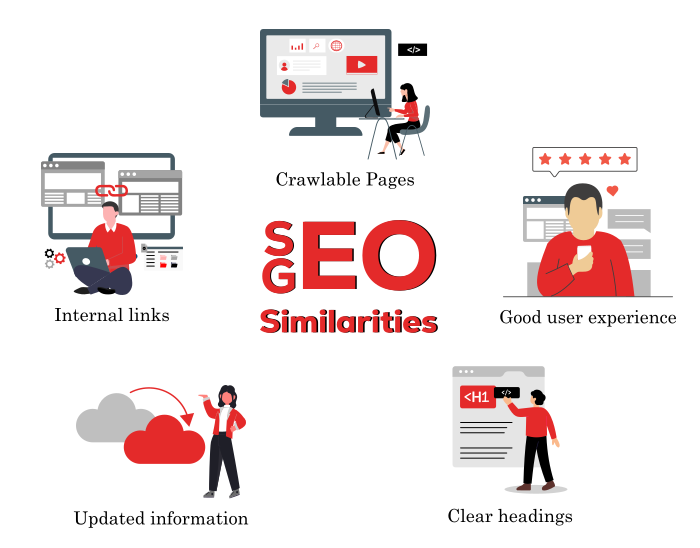
GEO is not a replacement for SEO. It builds on it.
-
Crawlable pages
-
Helpful content
-
Clear headings
-
Strong topic coverage
-
Internal links
-
Structured data where relevant
-
Updated information
-
Business credibility
-
Good user experience
If your website has poor technical SEO, thin content, confusing structure, and weak trust signals, GEO will not magically fix it.
So the first step toward GEO is still strong SEO.
A messy website is hard for both Google and AI systems to understand.
What GEO Adds on Top of SEO
GEO adds a new layer: answer visibility.
That means your content should not only be optimized to rank. It should also be easy for AI systems to extract, verify, and use.
GEO adds work like:Answer-first writing: Do not hide the answer in paragraph six. Start sections with the useful points, then explain.
-
Before (Traditional Style): When considering how to structure your website for modern search visibility, it is often beneficial to think about how information flows and where users expect to find key details after scrolling through introductory paragraphs.
-
After (Answer-First GEO Style): Technical fixes, on-page updates, and content planning
-
After (Answer-First GEO Style): Answer-first writing means placing the core definition or direct solution in the very first sentence of a section, followed by supporting context. AI engines extract direct statements much faster than buried explanations.
Entity clarity AI systems should clearly understand your brand name, service, location, industry, author, and expertise.
Citation-ready facts Use statistics, dates, examples, and credible sources. Vague claims are weak, while verifiable information makes your content more trustworthy and AI-friendly.
Third-party proof Build credibility with mentions on review sites, industry blogs, news websites, Reddit, LinkedIn, YouTube, business directories, and other trusted platforms to strengthen your AI visibility.
Brand consistency Ensure your business name, address, contact details, and other information remain consistent across your website, Google Business Profile, social media profiles, directories, and review platforms.
AI prompt testing Regularly test how AI tools describe your brand, competitors, services, and industry category to identify gaps and improve your overall AI presence.
This is where GEO becomes practical. It is not only content writing. It is brand visibility management across AI systems.
Example: SEO vs GEO in Real Life
“Best SEO agency for AI visibility optimization”
With SEO, your goal is to rank a service page or blog post for that keyword.
You would optimize:-
Title tag
-
H1
-
Content
-
Internal links
-
Backlinks
-
Schema
-
Page speed
-
Search intent
With GEO, the question becomes different:
Will AI systems mention your agency when users ask about AI visibility, GEO, or modern SEO services?
To improve that, you need:
-
A clear AI visibility service page
-
Content explaining GEO, AI Overviews, Perplexity, and ChatGPT Search
-
Case studies or examples
-
Strong brand mentions
-
Clear author expertise
-
Reviews and third-party proof
-
Updated information about AI search trends
SEO gets the page ready to rank. GEO gets the brand ready to be recognized.
How to Measure GEO
SEO has clear tools: Google Search Console, GA4, rank trackers, crawlers, backlink tools, and reporting dashboards.
GEO measurement is still developing, but it is becoming more practical.
Bing Webmaster Tools now has an AI Performance report that shows citation activity, cited pages, grounding queries, and visibility trends for AI-generated answers.
To see how your brand currently performs in generative engines, run regular manual prompt tests across tools like ChatGPT, Perplexity, and Google AI Overviews. Test queries using formats such as:
-
"What are the top-rated agencies specializing in [your core service] in [your city]?"
-
"Can you compare the top providers for [your specific product or service category]?"
-
"Who are the industry leaders providing [solution] solutions in [region]?"
-
Is your brand mentioned in AI answers?
-
Is your website cited in Perplexity or Bing Copilot?
-
Do AI tools describe your business correctly?
-
Which competitors appear more often?
-
Which sources are AI tools citing?
-
Are your key service pages easy to find and understand?
-
Are your old pages missing fresh data?
This is not as clean as traditional rank tracking yet. But it is becoming part of modern SEO reporting.
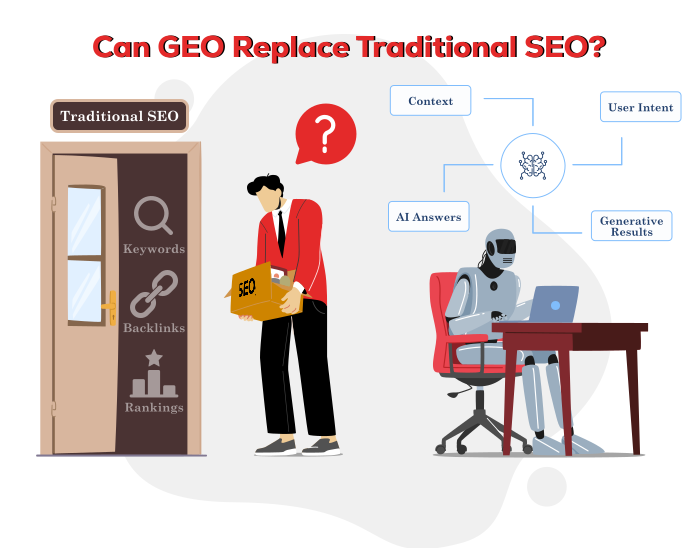
Is GEO Replacing SEO?
No. GEO is not replacing SEO. Search engines still depend on traditional ranking factors to discover and evaluate web pages. GEO builds upon those foundations by improving how AI systems interpret and reference your content. Businesses that combine SEO with GEO are better prepared for the future of search than those relying on only one strategy.
Which One Should You Focus On?
You should not choose between SEO and GEO. You need both.
-
Use SEO to make your website technically strong, searchable, crawlable, and rankable.
-
Use GEO to make your content clear, trusted, quotable, and visible inside AI-generated answers.
A good 2026 strategy should connect both:
-
Technical SEO for crawlability
-
On-page SEO for relevance
-
Content strategy for topical depth
-
Schema for better understanding
-
Brand building for entity trust
-
Fresh data for AI answers
-
Third-party mentions for authority
-
AI visibility checks for new discovery channels
Build a Future Ready GEO & SEO Strategy
Search is evolving rapidly, and businesses need strategies that work across both traditional search engines and AI powered platforms. By combining technical SEO, high quality content, structured data, entity optimization, and AI visibility monitoring, businesses can improve discoverability, build credibility, and reach customers wherever they search.
At Xcodefix, we help businesses create integrated SEO and GEO strategies that improve rankings, strengthen AI visibility, and build long term search performance across Google, ChatGPT, Perplexity, Bing Copilot, and other AI search platforms. Partner with Xcodefix to strengthen your SEO, improve AI visibility, and build a long term search strategy that delivers measurable results.