
Improve SEO by Updating Blog Posts for Higher Rankings
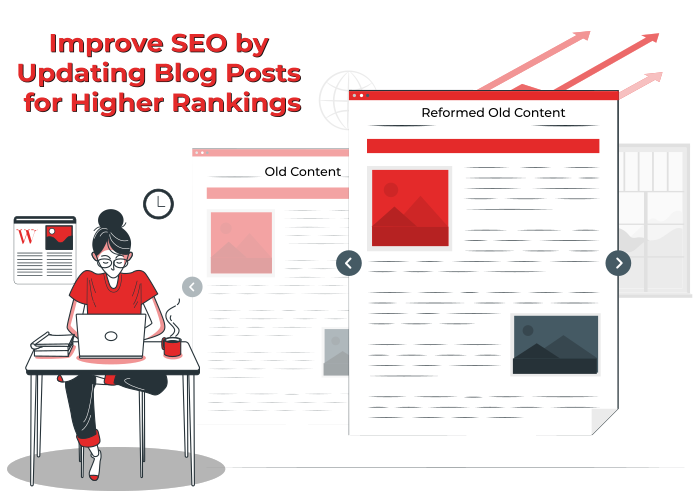
When it comes to SEO for their respective industries, most firms focus on creating new content constantly, because they believe that by consistently creating new blog posts, their traffic will increase enormously. However, traffic growth is usually hidden in their existing content because much of their optimization will come from their old content as much as their new content will have an impact generally compared to revamping what already exists. This article will show why old content outranks new content and the role this will play in their SEO optimization process.
The Untapped Potential of Current Pages
Backlinks, keyword rankings, and search visibility are all important SEO signals that are already present in the content of your website. These pages have history because actual users have likely visited, crawled, and indexed them.
You build on this existing authority rather than reset it when you update previous blog posts, rather than beginning from scratch. This facilitates search engines' recognition of the page's value following optimization.
How Often You Should Update Old Content
Most pages benefit from updates every six to twelve months, guided by performance, not a fixed schedule. Monitor impressions, click-through rates, and seasonal trends. Pages with steady views but declining clicks need earlier refreshes. Evergreen content still requires checks for accuracy. Using a data-driven rolling update cycle keeps your top pages fresh, signals site activity, and avoids unnecessary edits.
The Process of Making a New Page
When you publish new content, you have to start over. A new page has no authority yet, no engagement history, and no backlinks:
-
Add internal links and wait for crawling to complete.
-
Attract backlinks and shares.
-
Compete against established content for similar SEO keywords.
-
Wait weeks or months for visibility.
Meanwhile, your old pages might already be halfway up the search ladder; they just need a boost through content refresh and better optimization.
When Updates Work Best
Refreshing content works brilliantly when:
-
The topic is still relevant but slightly outdated.
-
The page has impressions, but a low click-through rate.
-
You can add new data, visuals, or keywords.
-
You can fix internal linking and structure.
In these cases, updating content is faster, cheaper, and more effective for improving SEO rankings.
How to Measure Content Decay
-
Monitor Impressions- Check if search impressions for a page are dropping over time. A steady decline can indicate waning relevance.
-
Track Traffic- Falling page views or organic traffic suggest the content is losing its audience.
-
Watch Engagement- Look for lower time on page, fewer clicks, or reduced social shares.
-
Analyze Competitors- If similar pages outrank yours, your content may be outdated or less useful.
When to Rewrite vs Refresh
| Scenario | Action | Reason / Insight |
|---|---|---|
| Page topic is outdated or irrelevant | Rewrite | Content no longer matches user intent or industry trends. |
| Page has declining traffic but still relevant | Refresh | Update stats, examples, keywords, and visuals to regain performance. |
| Poorly written or thin content | Rewrite | Improve depth, structure, and readability to meet SEO standards. |
| Minor factual updates needed | Refresh | Correct errors or add small details without changing core content. |
| Competitors are outranking significantly | Rewrite | Revamp content fully to compete and regain search visibility. |
| Evergreen content with small performance dips | Refresh | Maintain accuracy and improve CTR without overhauling entirely. |
This format helps you decide efficiently based on content condition and SEO goals.
Content Clusters & Internal Linking
Strengthen Topic Clusters
-
Updated pages act as central nodes or supporting content in a cluster.
-
They help group related pages around a main pillar topic.
-
Search engines understand your site as an authoritative source on that topic.
Improve Internal Linking
-
Refresh old pages to add links to new content and vice versa.
-
Distribute link equity across related pages, boosting overall SEO.
-
Helps users navigate easily between related topics, increasing engagement.
Boost Topical Authority
-
Consistently updated and well-linked pages signal expertise and relevance.
-
Enhances credibility in search results, making your site a go-to resource.
-
Strengthens your chances of ranking for multiple related keywords.
How to Strategically Update Old Content
Here’s a simple process to follow for SEO content optimization:
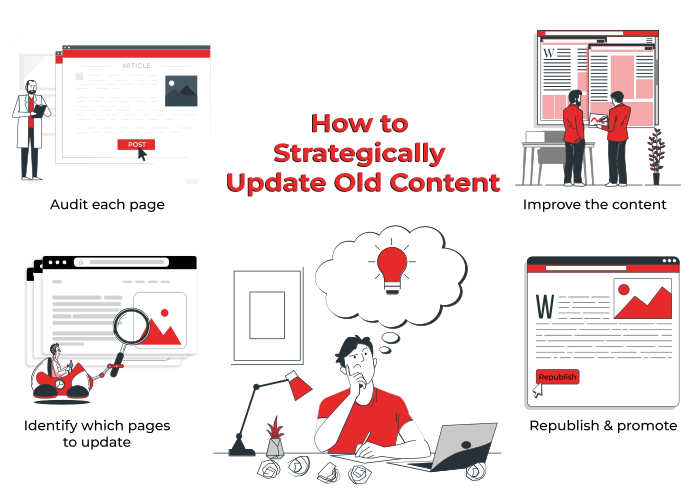
a) Identify which pages to update
Use tools like Google Search Console or Ahrefs to find pages with:
-
Declining traffic.
-
Old publication dates
-
Keywords ranked between positions 11–30.
b) Audit each page
Check:
-
Meta title and description alignment with search intent.
-
Content accuracy, freshness, and overall readability.
-
Keyword placement, internal linking, and heading structure optimization.
-
Schema markup implementation, mobile usability, and page speed performance.
c) Improve the content
-
Add new insights, updated statistics, and relevant internal links.
-
Update visuals, refresh media assets, and fix broken links.
-
Include secondary and long-tail SEO keywords naturally.
-
Adjust the tone and formatting for stronger user engagement.
d) Republish & promote
Once optimized, update the “last modified” date, share it across your channels, and track performance.
Why This Method Often Outperforms New Content
Reviving older pages saves time and amplifies results because:
-
You already have established authority and existing backlinks.
-
You receive faster indexing and quicker ranking responses.
-
You preserve existing SEO momentum and performance.
-
You avoid keyword cannibalization between similar or competing pages.
In short, it’s a smarter use of your content resources.
When to Create New Pages Instead
Sometimes, creating new content still makes sense, especially when:
-
You’re entering a new niche or topic cluster.
-
The user intent has changed drastically.
-
You need new landing pages for new services.
-
Your old page can’t be salvaged or is off-topic.
A balanced content strategy for SEO combines both consistent updates and thoughtful new posts.
Content Update Strategy for Sustainable SEO Growth
Here’s a practical rule:
-
Spend 40% of your content time updating old pages.
-
Use 60% for new topics or formats.
Track everything: ranking changes, traffic, engagement, and conversion rate. Data will tell you where to focus next.
Example Scenario
Suppose the title of your blog is the SEO Trends 2023. You can write a new post entirely in the year 2025 instead of:
-
Rename it to SEO Trends 2025: What Has Changed and What Remains.
-
Refresh stats and add AI SEO optimization insights.
-
Add internal links to new related posts.
-
Re-optimize the meta tags.
Probably, that fresh page will be doing better than a new one in weeks.
Mistakes to Avoid
-
Don’t fake updates. Search engines detect thin edits.
-
Avoid duplicate content or keyword overlap.
-
Always align updates with search intent.
-
Continuously monitor backlinks, rankings, CTR, and bounce rate.
Important Metrics
Track improvements using these metrics:
-
Organic traffic growth
-
Keyword ranking movement.
-
CTR (click-through rate) on updated pages.
-
Engagement time and bounce rate.
If these numbers go up after an update, you’re doing it right.
The Mindset Shift
Refreshing website content is a mentality change as much as a technical SEO tactic. It is all about enjoying what is already created and making another step to provide the user with the best.
The future of SEO is not based on the addition of more and more new pages to the Internet; rather, it is on developing a trusting content ecosystem that is user-centered and offers value on a regular basis.
Partner with Xcodefix for Content Refresh & Higher Rankings
The most cunning digital brands understand that it is the way of growth to do more, rather than more. Consider looking at your analytics before you make your next round of blogs, your best opportunities may very well be sitting on your site already.
Focusing on updating old content rather than constantly creating new pages maximizes SEO impact, preserves link equity, and strengthens topical authority. By monitoring content decay, optimizing for featured snippets, and applying a data-driven content refresh strategy for higher search visibility, businesses gain lasting results. Partner with Xcodefix for quality, SEO-friendly content writing that elevates your rankings and ensures sustained digital growth.