
How to Appear in ChatGPT Answers With Citation SEO ?
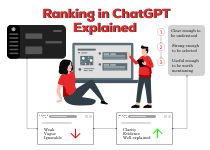
Most people still talk about ranking in ChatGPT as if it works like old search, but that is not really what happens. In a normal search engine, the goal is to push a page higher in the blue link results and earn the click. In ChatGPT responses, the game shifts. The real win is not just showing up somewhere on the web. It gets retrieved as a relevant source, cited as trusted, and helps shape the final answer. That change matters a lot, because it means AI SEO is not only about keyword placement or page rank anymore. It is about making content clear enough to be understood, strong enough to be selected, and useful enough to be worth mentioning.
That is exactly why so many brands miss the mark. They still optimize pages like search has not changed, while AI driven discovery is already moving in another direction. A page may rank on Google and still do very little inside a ChatGPT answer if the content is weak, vague, or easy to ignore. On the other hand, a page with sharp topic clarity, real evidence, and well framed explanations can quietly punch above its weight by becoming part of the answer itself. That is where this topic becomes fascinating; to rank in ChatGPT answers in 2026, content has to do more than sit on a results page. It has to enter the system, earn trust, and influence what the user finally reads.
What Ranking in ChatGPT Responses Means for AI SEO?
Being retrieved
This explains that your content must first be discovered and considered relevant for the user’s query. If the page is not retrievable, it cannot enter the response process at all.
Being cited
This explains that once content is retrieved, it must be trustworthy and useful enough to be referenced as a source. This is where citation worthy content, authority, and clarity matter.
Being influential inside the final answer
This is the smartest point in the section. It explains that true visibility is not just getting listed as a source, but actually shaping the language, facts, and direction of the final AI answer.
How ChatGPT Search Works for AI SEO in 2026?
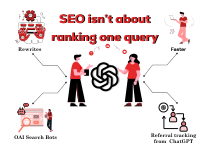
ChatGPT search in 2026 does more than pull a quick result from the web. It can search current web sources, show inline citations, and in many cases rewrite a user’s original question into narrower, more targeted searches to find better supporting information. That changes the SEO angle quite a bit. A page now needs to match not only the main seed query, but also the likely refined subqueries, follow up questions, comparisons, and intent variations that may sit underneath it. In simple terms, content that stays clear, specific, and well structured has a better chance of being retrieved, cited, and used inside the final answer.
The first technical requirement: make sure ChatGPT can access the page
OAI SearchBot access & robots.txt
This point can cover what OAI SearchBot is, why robots.txt access matters, how it differs from GPTBot, and why blocked pages may lose snippet inclusion in ChatGPT search.
Referral tracking from ChatGPT
This point can explain that traffic from ChatGPT can be tracked using utm_source=chatgpt.com, which helps marketers measure ChatGPT referral visits more clearly.
What current research says ChatGPT-style engines reward?
Current research around ChatGPT style search shows that search engines prefer to display web pages which they can scan with speed and verify with high accuracy and which they can cite without doubt. The standard requirements demand web pages to present organized content which includes reliable proof and academic references and explanations which deliver direct and practical information about the subject. Research demonstrates that only certain artificial intelligence SEO strategies succeed in practice while others fail because they sound intelligent. Many shortcut style tricks fall flat, while genuinely helpful, well organized, and citation worthy content continues to carry more weight.
Build Pages That Are Easy to Cite
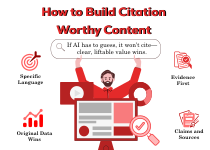
If a page makes an AI system do too much guessing, that page usually loses its chance. Content becomes easier to cite when the value sits right there on the page, clear, sharp, and easy to lift with confidence.
-
Use original statistics when possible: Original numbers give your page weight. Fresh data, survey findings, or internal benchmarks make the content feel more reference worthy because systems prefer information that adds something concrete, not recycled fluff.
-
Support claims with clear sourcing: Strong content does not throw opinions into the air. When a claim is backed by a visible source, it becomes easier to trust, easier to verify, and much easier to cite.
-
Add expert quotations that sound real & relevant: A strong expert quote can do a lot of heavy lifting. It gives the page authority, adds point of view, and makes the content feel grounded instead of sounding like another generic SEO article.
-
Write clean definitions for important terms:Definitions are citation magnets when they are direct and useful. If a page explains a concept clearly in one strong block, it stands a better chance of being picked up in AI answers.
-
Use comparisons to clarify decisions: Comparison sections help because they reduce confusion. When a page clearly explains one option against another, it gives AI systems structured reasoning they can reuse inside a final answer.
-
Create concise answer blocks inside the content: Sometimes the best lines on a page are the shortest ones. A compact answer block that responds directly to a question gives AI engines something they can retrieve and cite fast.
-
Keep the language specific, not vague: Pages become stronger sources when they say something clearly and mean it. Loose writing gets ignored, but specific writing gives systems more confidence in using the content.
-
Make every section stand on its own value: A good citation worthy page does not hide the answer under filler. Each section should deliver one clear takeaway so the content stays usable even when pulled into a smaller context.
-
Show evidence before making big conclusions: Strong pages do not jump to the finish line too early. They lay out the facts first, then build the insight, which makes the reasoning easier for AI systems to follow.
-
Format for fast understanding: Clear headings, short paragraphs, and sharp content flow make a page easier to scan. When the structure is clean, citation potential usually improves without forcing anything.
Strengthen Entity Clarity & Topical Authority
When AI search systems try to understand a page, they do not look at one sentence alone. They look for stable signals across the website. If your brand, services, products, founders, tools, industries, and use cases are explained clearly and consistently, the system gets a much better idea of who you are and what space you belong to.
-
Keep core business entities consistent: Your brand and service descriptions should not keep changing from page to page.
-
Make relationships between topics easier to understand: A service page should connect naturally with related blogs, guides, and supporting content.
-
Use topic clusters to show real depth: One page can introduce a subject, but connected pages prove broader expertise.
-
Help the system see a bigger knowledge set: When related content supports each other, the site feels more trustworthy and complete.
-
Turn relevance into authority: Clear entity signals and strong topical coverage help a page feel more dependable in AI driven search.
Earn Authority Beyond Your Own Site
Strong AI visibility does not come only from what your own website says. It also grows from what the rest of the web says about you. That is where off site authority starts to matter in a big way.
Digital PR
Digital PR helps place your brand in relevant publications, industry conversations, and trusted media spaces. That kind of visibility adds real weight because it shows the brand is being noticed outside its own website.
Expert Mentions
When respected professionals, analysts, or niche voices mention your brand, your authority becomes more believable. It tells both users and AI systems that your name is part of a larger trusted discussion.
Citations from Reputable Publications
A reference from a credible publication can do more than repeated self claims on your own site. It strengthens topical trust and supports wider source recognition.
Community Proof
Community discussions, peer mentions, niche forums, and industry recognition all help shape brand credibility. These signals may look small on their own, but together they build stronger outside validation.
Reference Worthy Branded Research
Original data, surveys, benchmarks, and findings give people something valuable to quote. That is often how authority starts multiplying because others begin using your work as a reference point.
Keep the Page Fresh, Accountable, & Easy to Verify
-
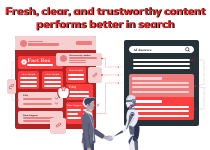
Show clear publish or update dates: Fresh timestamps help the page look current and relevant.
-
Use named authors when possible:Real authors make content feel more accountable and trustworthy.
-
Cite important claims clearly: Easy to verify facts make the page easier to trust and cite.
-
Refresh outdated examples and references: Even good content loses strength when it starts feeling old.
-
Keep the page layout clean: Clear headings and readable structure improve scanning and verification.
-
Make clarity part of credibility: A page that is easy to follow often feels easier to trust.
What Does Not Work in 2026
| Weak Tactic | Why It Does Not Work |
|---|---|
| Hidden prompt tricks | These tactics are unstable, unreliable, and do not create lasting ChatGPT visibility. |
| Spammy AI fluff | Thin content adds little value and gives AI systems no strong reason to retrieve or cite it. |
| Vague listicles | Broad but shallow articles often fail because they do not offer enough clarity, depth, or evidence. |
| Shallow keyword swapping | Replacing one keyword with another across pages does not build topical authority or answer quality.. |
| Overhyped AI SEO tricks | Many tactics sound clever in theory, but later research shows they often underperform in practice. |
| Artificial manipulation methods | These methods are not durable, not trustworthy, and not suitable for long term brand visibility. |
A Practical Checklist for Improving ChatGPT Visibility
If the goal is stronger visibility in ChatGPT responses, the work needs to stay practical. These are the core checks that matter most before expecting better retrieval, citations, or answer inclusion.
-
Allow OAI SearchBot access through robots.txt: If ChatGPT cannot access the page properly, the content may never enter the response process in a meaningful way.
-
Confirm crawlability and indexing for key pages: Pages should be technically accessible, indexable, and free from barriers that weaken discoverability.
-
Tighten entity signals across the site: Make your brand, services, products, and topic relationships clear enough for AI systems to understand without confusion.
-
Add evidence, original data, and expert quotations: Pages become stronger when they give AI systems something solid to retrieve, trust, and cite.
-
Strengthen concise answer blocks inside the content: Direct answers help the page support both seed queries and likely refined follow up searches.
-
Build stronger internal topic clusters: Connected pages help the system see your content as part of a broader and more reliable knowledge set.
-
Refresh stale pages before they lose trust: Updated information, improved examples, and current references make the page more usable and more credible.
-
Earn external authority beyond your own site: Mentions, citations, digital PR, and trusted references from other sources strengthen overall AI search visibility.
ChatGPT SEO Strategy Insights & Xcodefix for Future Search
The real way to judge whether these strategies will work is simple. Do not look at AI SEO as a shortcut to force visibility. Look at it as a method of making your content easier to access, easier to trust, easier to understand, and easier to cite. When a page is technically open, clearly structured, backed by evidence, consistent in its entity signals, and supported by authority beyond its own domain, it starts aligning with how ChatGPT style search actually works. That is the bigger takeaway from this blog. In 2026, success will not come from chasing gimmicks or surface level optimization. It will come from building pages that deserve to be retrieved and referenced. For businesses that want to move in that direction with a stronger long term view, Xcodefix stands out as a reliable option to shape that future ready SEO path with the right balance of strategy, content depth, and AI search understanding.