
How On-Page and Off-Page SEO Impact Google Rankings in 2025
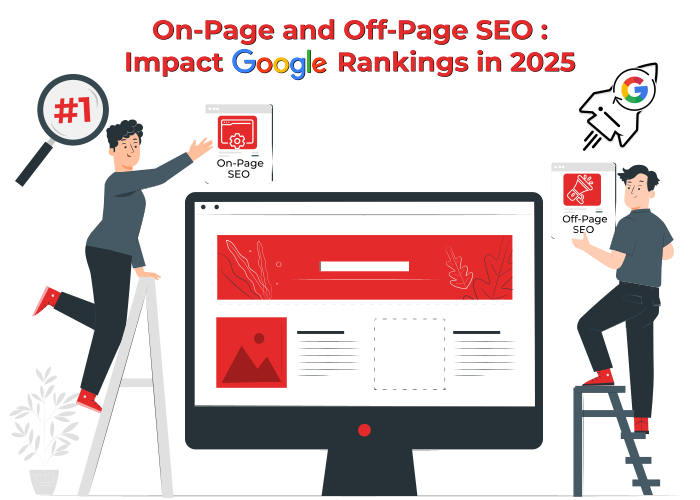
Search engine optimization is no longer a play of individual strategies. With the continued algorithm updates becoming more intelligent and the user behavior constantly shifting, it is now more important to know the significance of the on-page and off-page SEO than before. On-page SEO centers everything that is under your control, such as the content of the site, its design, and its performance. On the contrary, it is Off-page SEO that indicates the authority and highest value of your site with its external recognition, such as backlinks and mentions. Nowadays, the two play fundamental roles, though they would be in various faculties, depending on the nature of the site you are located at and the competitors that you have on the same. Although on-page SEO establishes the basis of capturing discoverability and relevancy, off-page SEO goes on to enhance trust and visibility within the digital environment. The more the Google ranking mechanisms adopt the more comprehensive approach of content quality and authority, the more the question of how and when to prioritize them is a matter of life and death to any business that tends to rank and be seen in the long run. This paper disintegrates clearly and pragmatically.
On Page SEO Techniques to Optimize Your Website in 2025
On-page SEO is the art of optimizing all that you can control on your site in order to make it more understandable and rank better for search engines. On-page SEO determines how users and crawlers experience and view your site. In 2025, intelligent on-page SEO is not keywords. It is intent, structure, speed, and clarity. The following is what it is comprised of:
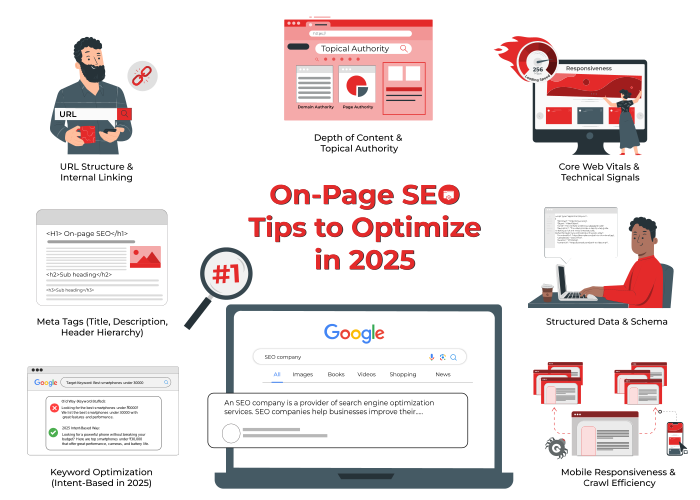
Keyword Optimization (Intent-Based in 2025)
It's not about stuffing in exact-match keywords anymore. Google wants to know whether your page serves up what people really want. Use keywords naturally. Pay attention to user intent. Give people clear answers to questions.
Meta Tags (Title, Description, Header Hierarchy)
The title tag is your first impression. Make it relevant, descriptive, and click-worthy. The description informs users about what is on your page. Headers should be in the proper hierarchy, such as H1, H2, and H3 so that they can assist in guiding readers and search engines.
URL Structure and Internal Linking
Make your URLs clean, readable, and concise. Avoid stuffing random numbers and codes. Link sensibly. This helps users navigate your site and informs Google about what's related to what.
Depth of Content and Topical Authority
Thin content is no longer ranked. Create substantial, targeted content that digs deep into a subject matter. Subdivide subtopics, respond to genuine questions, and keep it up to date. The more useful your page is, the more authority it gains.
Core Web Vitals and Technical Signals
Google now tracks how people feel about your website. Ensure that your pages load quickly, don't move around while loading, and react to clicks straightaway. These minor tech variations make a difference in rankings.
Structured Data and Schema
Insert additional tags behind the scenes that make it simpler for Google to comprehend your content. Implement schema to display reviews, prices, events, or FAQs in search results. It increases visibility and clicks.
Mobile Responsiveness and Crawl Efficiency
Most of your users are entering on mobile. Ensure that your site is aesthetically pleasing and functional on any screen size. And make it simple for Googlebot to crawl your pages. A clear layout and nav can be a game-saver.
What Is Off-Page SEO & How It Builds Site Authority
Off-page SEO refers to everything that occurs outside of your website that enhances its search positions. All these efforts inform search engines that other people trust your site and consider it an authoritative site. Simply put, off-page SEO is merely establishing the reputation, credibility, and exposure of your site on the internet. Here's how it works:
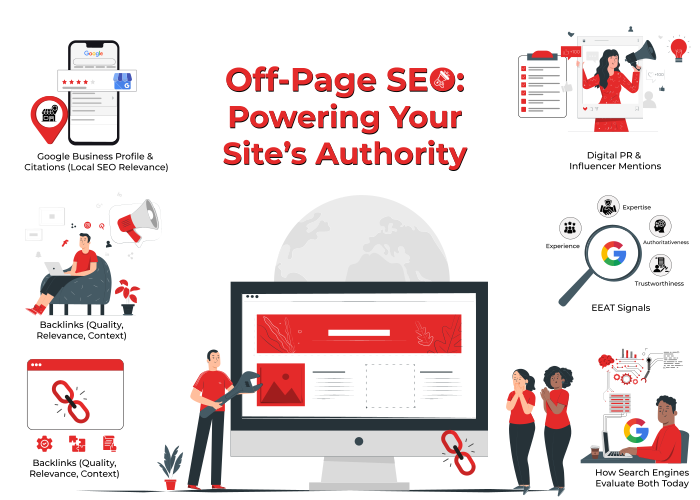
Backlinks (Quality, Relevance, Context)
Not every link is created equal. A few links from authoritative, similar websites are more valuable than a hundred from everywhere. Backlinks must be from comparable websites dealing with your niche. They must be positioned in natural spots, with context appropriate to your content. This tells Google your page is high-quality enough to share.
Social Signals and Branded Mentions
Each time your content is quoted or mentioned by others online, it serves as an indicator that your website is significant. Social signals are what help increase exposure without being overly ranking signals. The more your brand name is spoken about in actual conversations, the more Google will be listening.
Google Business Profile and Citations (Local SEO Relevance)
For local SEO, you need a live Google Business Profile. It informs Google of your existence and gets you appearing for local search. And also, correct citations on authoritative directories create authority. Ensure that your business name, address, and phone number are the same everywhere they're listed.
Digital PR and Influencer Mentions
Getting mentioned on news websites, industry blogs, or influencer columns establishes robust authority. These mentions create high-quality backlinks and expose your brand to the appropriate people. A good digital PR strategy can create robust exposure beyond the usual backlinks.
EEAT Signals (Experience, Expertise, Authoritativeness, Trustworthiness)
Google now takes with great seriousness who is behind your content. Do you actually have expertise in your field? Is your brand well-known for knowledge? Are you trusted? EEAT helps search engines to decide the quality of content, especially for sensitive subjects like finance or health.
How Search Engines Evaluate Both Today
Google algorithms in 2025 assess websites on a well-balanced combination of on-page and off-page signals. On-page signals like semantic relevance, structured data, and Core Web Vitals signify content worth and usage. Off-page metrics like contextual backlink profiles and EEAT signals assess authority and trust. The algorithm prefers content that is in tune with user intent, demonstrates topical depth, and receives validation from high-authority external sources in the way of natural, reputation-based links.
Smart SEO Strategy Using On-Page & Off-Page Synergy
| On-Page SEO Element | How to Improve Off-Page SEO Impact |
|---|---|
| High-Quality Content | Attracts natural backlinks from trusted sources, blogs, and news platforms. |
| Clear Site Structure | Helps search engines crawl and pass link equity more efficiently. |
| Internal Linking Strategy | Distributes the authority gained from backlinks to deeper, valuable pages. |
| Fast Page Speed (Core Web Vitals) | Increases user satisfaction, reducing bounce rate from referral traffic. |
| Optimized Meta Tags and Headers | Improves visibility in search, making shared links more engaging and clickable. |
| Schema Markup | Boosts rich snippet appearance, increasing chances of organic and PR-based links. |
| Topical Authority and Depth | Builds trust, encouraging citations and references from niche sites. |
| Mobile Responsiveness and UX | Ensures a smooth experience for users coming through backlinks on any device. |
Top SEO Mistakes to Avoid in 2025 for Better Rankings
Keyword Stuffing
Spinning perfect-match words ruins readability and is a spam indicator. Google now prefers context-based, intent-oriented content that naturally responds to user queries without repetition.
Link Farming
Constructing links from poor-quality networks damages trust signals. Focus on constructing backlinks from high-authority, related sites through authentic outreach and content value.
Ignoring UX and Slow Mobile Performance
Poor mobile speed and layout shifts hurt rankings. Google prioritizes mobile-first experiences that load fast and deliver a smooth, stable interface for every user.
Over-Optimizing Anchor Text
Using exact keywords in every link anchor looks manipulative. Use natural, varied anchors that reflect real language and context for better algorithm trust.
Pro SEO Tips to Balance On-Page & Off-Page Effectively
Prioritize Topical Relevance Before Backlinks
Build deep, informative content around specific topics before chasing backlinks. Google now values authority and coverage more than sheer number of external links.
Use Semantic SEO and NLP-Friendly Structures
Write content that mirrors natural language patterns. Use related terms, answer variations of user queries, and structure content for machine understanding and human clarity.
Use Linkable Assets (Tools, Data, Guides)
Develop standalone assets such as calculators, case studies, or research articles. These assets naturally attract quality backlinks from related and authoritative websites.
Optimize Content Clusters and Topical Maps
Group associated content into master topics with a hub-and-spoke architecture. Internal linking supports authority and user/crawler travel.
On-Page and Off-Page SEO Services For 2025 Online Success
SEO excellence in 2025 is not a battle of on-page vs. off-page. It's bringing them both together in one strategic picture. On-page SEO makes your site rock-solid, well-organized, and easy to navigate. Off-page SEO then boosts its cred offline with trust signals. Both together, when used, create momentum, rank higher, and provide long-term search stability. For companies looking to dominate today's algorithmic game, investment in topicality, technical maturity, and authoritative outreach is the secret to success.
At Xcodefix, we specialize in delivering both on-page and off-page SEO services that work in harmony to elevate your brand. Whether you're optimizing technical SEO elements or building a powerful backlink profile, our expert team ensures your site performs at its best on every front. Partner with us for consistent growth, improved visibility, and measurable SEO success in 2025 and beyond.