
Why Your Site Isn't Showing Up in AI Search Results
Google Search has changed significantly with the introduction of Google AI Overviews. Rather than simply providing links to web pages, Google is now able to generate answers to the users' queries using summaries generated by AI and backed up by credible information gathered from several sources.
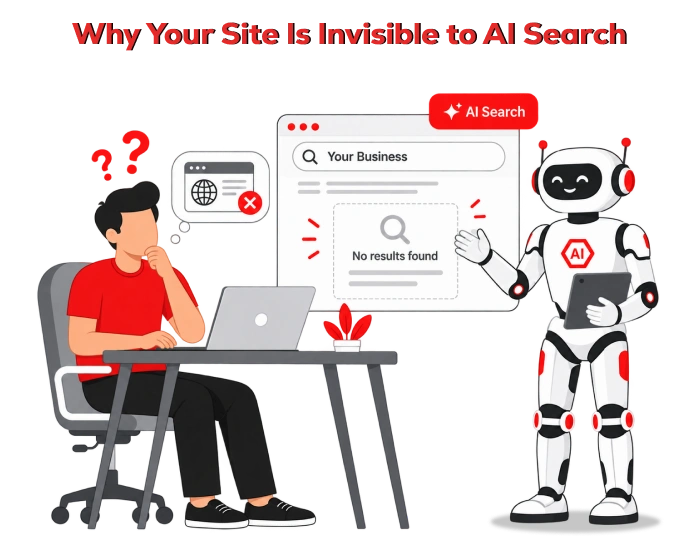
This new development implies that getting to the top organic results page is not enough anymore. In order for you to become visible online, you should have high-quality content on your website that is credible and well structured, thus easy for Google's AI to process and use as a source.
To appear in Google AI Summaries, you will need much more than SEO. This is because Google now requires a combination of several factors in addition to content. These are explained in this guide.
Understand How Google AI Overviews Work
Google AI Overviews create an answer through the analysis of information from many credible websites and not from one source. The AI will assess the quality of content, relevancy, recency, authority, and user experience in order to choose the pages to cite.
In contrast to conventional search rankings, AI Overviews will try to provide the most relevant answer and not the top ranking website. Even if a website is not the first organic result, it can be used if it has very good content and authority.
To increase the chance of being featured in AI Overviews, you have to produce the content which provides the answer and is valuable to users.
Match Search Intent Before Optimizing Keywords
Many websites focus heavily on keywords but overlook the reason behind the search. Google AI Overviews prioritize pages that satisfy user intent rather than pages that simply repeat keywords.
Prior to producing the content, it is important to know what people really need to know.
For instance, a person who has searched "Google AI Overview SEO" does not require an elaborate description of AI but needs effective methods to increase his visibility.
It is important to address the key question first and then elaborate on it.
Your Content Does Not Cover Search Intent
While some websites give too much importance to keywords, they neglect the main aim of the search: answering users' questions.
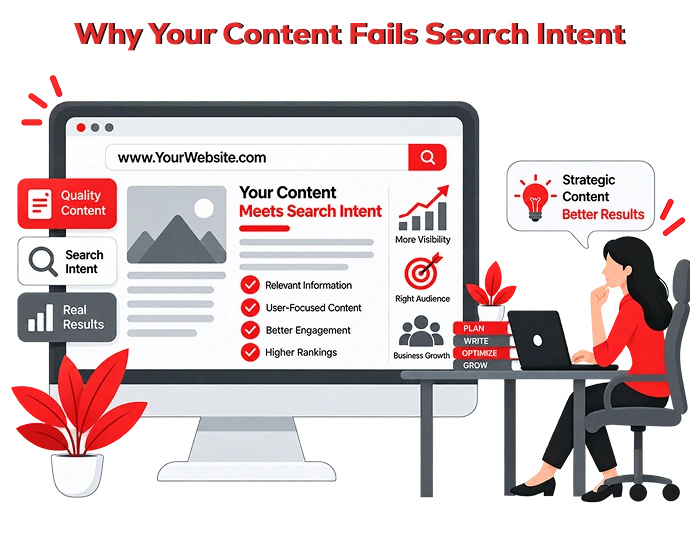
When someone searches for "How to appear in Google AI Overviews," the answer should be given as quickly as possible. If your article includes several paragraphs devoted to the introduction before giving any practical tips, the user might leave the page.
To better match search intent:-
Identify the main question users want answered.
-
Place the answer near the beginning of the page.
-
Cover related questions within the same article.
-
Avoid unnecessary introductions.
-
Write for users before search engines.
Content that solves the user's problem completely is far more likely to be referenced by Google's AI.
Write AI Friendly Content That Is Easy to Extract
Google's AI systems look for content that is easy to understand, summarize, and cite. Well structured pages are easier for both users and search engines to navigate.
Instead of writing long paragraphs filled with unnecessary information, organize your content into clear sections with descriptive headings.
Some effective formatting techniques include:-
Answer important questions in the first few sentences.
-
Use numbered steps for processes.
-
Add bullet lists for key points.
-
Include comparison tables where appropriate.
-
Use descriptive H2 and H3 headings.
-
Write short paragraphs that are easy to scan.
For example, instead of writing several paragraphs before answering a question, provide a concise summary first and then explain the details. This structure improves readability and increases the likelihood of your content being extracted for AI generated summaries.
Build Topical Authority with Content Clusters
Publishing a single article on a topic is rarely enough to establish authority. Google AI Overviews prefer websites that demonstrate deep expertise by covering a subject comprehensively.
A content cluster consists of one main pillar page supported by several related articles. Each article focuses on a specific aspect of the topic and links back to the primary guide.
For example, if your pillar page is about Google AI Overview SEO, supporting articles could include:-
AEO vs Featured Snippets.
-
Why Your Site Is Not Showing in AI Overviews.
-
AI SEO Best Practices.
-
How to Optimize Content for AI Search.
-
Technical SEO for AI Search
-
Common AI SEO Mistakes
This structure will allow Google to know the relationship between your content and help you increase your topical authority.
Remember to create links between all the related content on your site. Good internal linking will allow Google to crawl your content and increase the topical authority.
Increase E-E-A-T & Brand Authority
Google highly values the experience, expertise, authoritativeness, and trustworthiness of the website owner. This term is called E-E-A-T by Google.
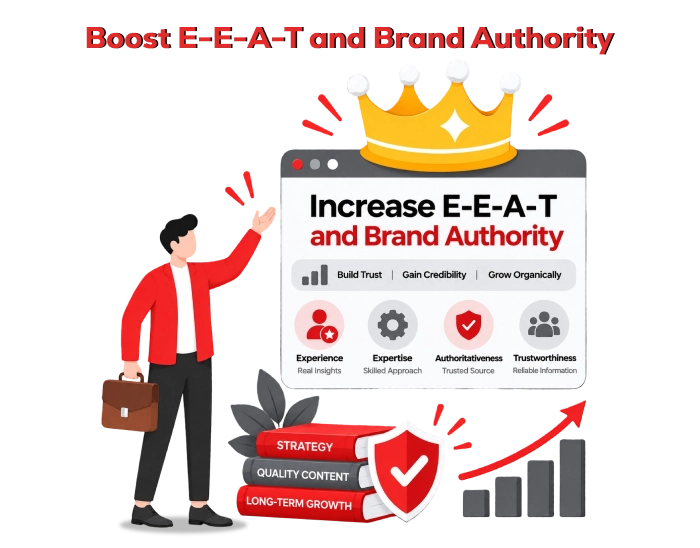
Although E-E-A-T does not affect your rankings directly, it affects how Google will judge your website's credibility.
You can strengthen these trust signals by:-
Publishing detailed author profiles.
-
Displaying your business information clearly.
-
Including real industry experience.
-
Sharing case studies and success stories.
-
Supporting claims with reliable sources.
-
Earning backlinks from reputable websites.
-
Encouraging genuine customer reviews.
Building brand authority also plays an important role. Businesses that receive consistent mentions across reputable websites often develop stronger trust signals than brands with little online presence.
Google is more likely to reference content from websites that consistently demonstrate expertise and provide reliable information.
Improve Technical SEO for AI Search
High quality content alone is not enough to appear in Google AI Overviews. Search engines must also be able to crawl, understand, and index your website efficiently. A strong technical foundation helps Google's AI access your content and evaluate its relevance.
Focus on these technical SEO best practices:-
Improve page loading speed.
-
Optimize your website for mobile devices.
-
Maintain healthy Core Web Vitals.
-
Fix crawl and indexing issues.
-
Use descriptive, SEO friendly URLs.
-
Implement structured data such as Article, FAQ, HowTo, and Organization schema.
-
Create a logical internal linking structure.
-
Keep your XML sitemap updated.
Technical SEO ensures that your content is accessible and easy for Google's systems to process, increasing your chances of being featured in AI Overviews.
Publish Original Content That Adds Value
Google AI Overviews are designed to provide users with reliable and valuable information. Content that simply repeats existing articles offers little reason for Google's AI to reference it.
Instead, create content that demonstrates genuine expertise and provides insights unavailable elsewhere.
Consider including:-
First-hand experience.
-
Original research.
-
Industry case studies.
-
Expert opinions.
-
Real examples.
-
Statistics from trusted sources.
-
Practical recommendations.
Original content helps establish authority while giving Google's AI stronger reasons to cite your pages instead of similar articles from competitors.
Optimize for Conversational Search Queries
People interact with AI powered search differently than traditional search engines. Instead of typing short keywords, they often ask complete questions using natural language.
For example, instead of searching for "AI SEO", users may search for "How can I optimize my website for Google AI Overviews?"
To improve your visibility:-
Use conversational language.
-
Create question-based headings.
-
Answer follow-up questions naturally.
-
Target long-tail keywords.
-
Include FAQ sections where appropriate.
Writing content that mirrors how people naturally ask questions makes it easier for AI systems to identify relevant answers and reference your content.
Refresh & Expand Existing Content
Google AI Overviews favor content that remains accurate and up to date. Even well performing articles can lose visibility if they contain outdated information.
Instead of constantly creating new pages, regularly improve your existing content.
You should:-
Update statistics and industry data.
-
Replace outdated screenshots.
-
Add recent examples.
-
Expand thin sections with additional insights.
-
Improve internal linking.
-
Remove outdated recommendations.
-
Add answers to newly emerging questions.
Keeping your content fresh signals that your website remains an active and trustworthy resource.
Measure & Improve Your AI Visibility
AI SEO is an ongoing process rather than a one time task. Google's AI Overviews continue to evolve, making regular monitoring essential.
Track your content performance by reviewing:-
Organic traffic growth.
-
User engagement metrics.
-
Click-through rates.
-
Keyword rankings.
-
AI Overview citations.
-
Search Console performance.
-
Pages gaining or losing visibility.
Regular analysis helps identify opportunities for improvement and ensures your content remains competitive as search evolves.
AI SEO Best Practices Checklist
Before publishing your next article, make sure you can answer Yes to these questions:
-
Does the content answer the user's question immediately?
-
Does it satisfy search intent?
-
Is the information original and valuable?
-
Have you demonstrated experience and expertise?
-
Is the content easy to scan with headings and lists?
-
Does the page include relevant internal links?
-
Is structured data implemented where appropriate?
-
Is the page mobile friendly and fast loading?
-
Have you updated outdated information?
-
Does the article provide more value than competing pages?
If your answer is "Yes" to most of these questions, your content is much better prepared for Google AI Overviews.
Improve Your AI Overview Visibility with Xcodefix
For appearing on Google AI Overview pages, a business needs to do much more than just regular SEO. The business needs to have high-quality content, good technical infrastructure, topical authority, and trust factors which the AI search engines can refer to confidently.
Xcodefix helps businesses enhance their visibility via AI SEO, Answer Engine Optimization, technical SEO, content optimization, structured data, and topical authority techniques. Our team creates future ready SEO solutions that help websites perform better in both traditional search results and AI powered search experiences.
Whether you want to optimize existing content or build a complete AI SEO strategy from the ground up, Xcodefix can help your business stay ahead in the future of search.